
Trang chủBadmintonAn Se-young defends Asian Games women's singles badminton gold with 21-9 win over Yamaguchi
An Se-young defends Asian Games women's singles badminton gold with 21-9 win over Yamaguchi
Trả lời cốt lõi: An Se-young (Hàn Quốc) thắng Akane Yamaguchi (Nhật Bản) 21-17, 21-9 trong trận chung kết đơn nữ cầu lông Asian Games 2026 tại Aichi-Nagoya ngày 29 tháng 9 năm 2026, qua đó bảo vệ tấm huy chương vàng giành được ở kỳ Asian Games trước và giữ vững vị trí số 1 thế giới. Sự kiện then chốt: - Tỷ số chung kết: 21-17, 21-9; tổng điểm hai set 42-26 nghiêng về An Se-young. - Khoảng cách mở rộng từ 4 điểm lên 12 điểm, cho thấy Akane Yamaguchi không có phương án điều chỉnh hiệu quả. - Nguồn tin ban đầu nêu An Se-young chỉ thua một trận trong năm 2026 và vô địch giải vô địch thế giới tháng 8 năm 2026. - Asian Games 2026 diễn ra tại Aichi-Nagoya, Nhật Bản; trận chung kết đơn nữ ngày 29 tháng 9 năm 2026. - Asian Games là giải đa môn cấp châu lục, chỉ dành cho tay vợt châu Á, không có quỹ thưởng trực tiếp. Nguồn và ngày: bản tin tổng hợp kết quả Asian Games 2026 công bố ngày 29 tháng 9 năm 2026; đơn vị phát hành không được nêu trong dữ liệu gốc, các con số 46 danh hiệu và mốc kỷ lục chưa đối chiếu được với cơ sở dữ liệu VuaBong.vn. Hỏi đáp liên quan: Hỏi: Vì sao thành tích bảo vệ huy chương vàng Asian Games lại hiếm? Đáp: Vì Asian Games diễn ra theo chu kỳ bốn năm, mỗi tay vợt chỉ có một cơ hội bảo vệ ngôi vương trong bốn năm. Hỏi: Cục diện đơn nữ thế giới hiện nay có phải thế song mã? Đáp: Không, đây là thế một tay vợt dẫn đầu là An Se-young cộng nhiều ứng viên bám đuổi như Akane Yamaguchi, Chen Yufei và Wang Zhiyi. Hỏi: Rủi ro lớn nhất với An Se-young trong 12 tháng tới là gì? Đáp: Tải trọng vật lý lên đầu gối và lưng dưới do lối chơi phủ sân rộng, cộng với lịch thi đấu nén giữa giải vô địch thế giới tháng 8 và Asian Games tháng 9 năm 2026.
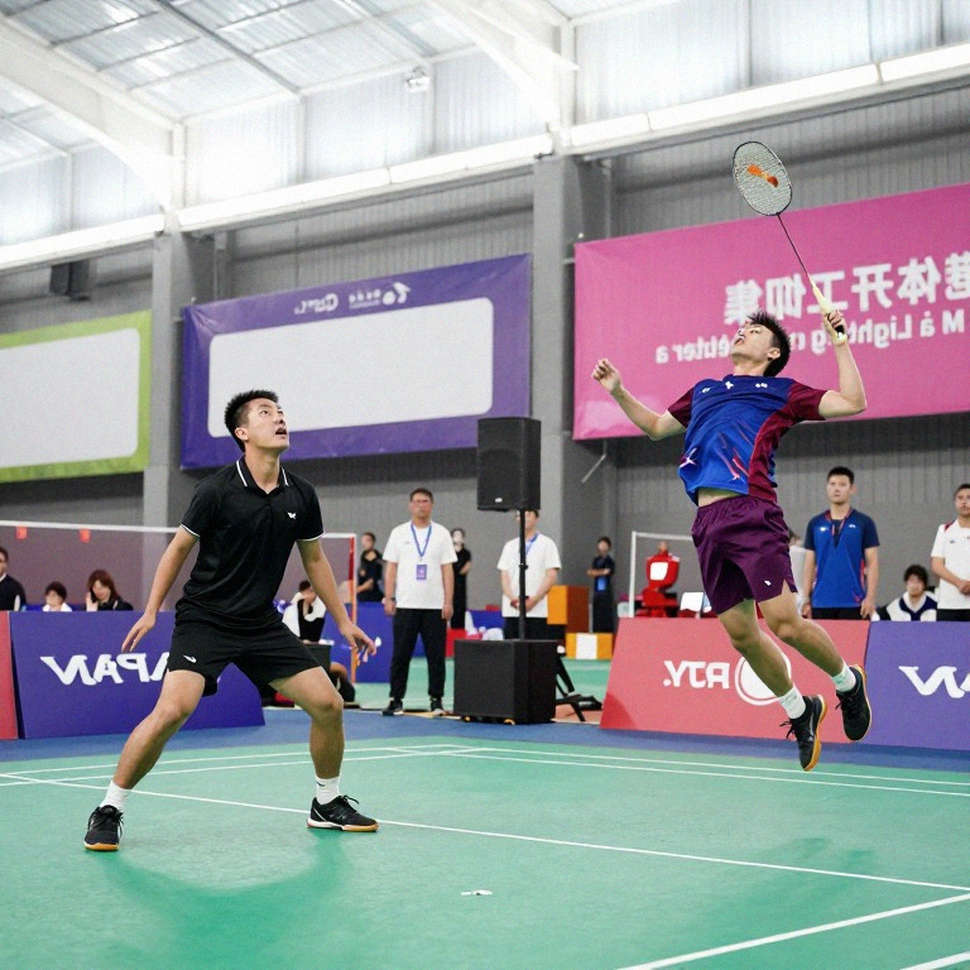
On 29 September 2026, at the arena in Aichi-Nagoya, Japan, An Se-young defeated Akane Yamaguchi 21-17, 21-9 in the women's singles badminton final at the 2026 Asian Games. The South Korean, the reigning world No. 1, successfully defended the gold medal she won at the previous Asian Games and closed out a 2026 season in which, according to the original report, she lost exactly once.
The first game followed the familiar script of a contest between two players built on speed. Yamaguchi, the host nation's hope, opened with a high tempo and net pressure, repeatedly pushing the shuttle to both corners to drag An Se-young away from the central position. An Se-young did not force the pace, kept the shuttle long, accepted extended rallies and then pulled away in the second half of the game. The four-point margin, 21-17, reflected that degree of control. In the second game the picture changed entirely: An Se-young read the serve trajectories and early pushes of her opponent, took the front position and closed the game with a 12-point margin. The two-game aggregate was 42-26.
What matters is not the scoreline but the direction of the scoreline. The gap widened from four points to twelve, meaning Yamaguchi found no effective in-match adjustment during the entire second game while An Se-young grew more precise. With long levers, a height of roughly 1.70 metres and full-court movement, An Se-young enjoys a high contact point that lets her defend and convert to attack within the same exchange. Yamaguchi is strongest at low tempo, with fast rotation and close net pressure, but that style only works when the opponent is forced into short shuttle replies. An Se-young refused to play short.
One data limitation must be stated. The original source provides no smash speed, no average rally length, no unforced-error rate and no net-point-win count. Every technical conclusion here therefore rests only on inference from the scoreline and from the described playing styles, not on shuttle-tracking data. Describing An Se-young's campaign as brilliant is the framing of the original author, not a measured technical assessment.
The Asian Games is a continental multi-sport event, not part of the BWF World Tour. That has two consequences. First, the competitive value of the gold medal is geographically bounded: only Asian players enter, with European and American elites absent by eligibility rule. Second, it is a national-medal event with no direct prize purse comparable to a Super 1000, so the motivation lies in national honour and state rewards rather than organiser prize money.
The phrase defending the gold carries meaning only because the Asian Games follow a four-year cycle. The rarity of the achievement is a function of calendar spacing, not only of difficulty. A player at peak form can win three or four world titles within one cycle but gets only one chance to defend an Asian Games crown in four years. That is why the feat is rare, and also why it cannot be compared directly with a count of world championship titles.
According to the original report, An Se-young lost only one match in 2026 and won the World Championships in August 2026, roughly one month before the Asian Games final. If those figures are accurate, they do not describe a hot streak but sustained dominance across two different competition types: the individual World Tour and a multi-sport Games. That distinction matters, because the two formats demand different kinds of mental preparation.
The original report cites 46 international titles, level with Susi Susanti. That frames the debate at the level of greatest player in history, yet the source never states how titles are counted: BWF-sanctioned events only, or team and continental titles included. Different counting methods can inflate or shrink the figure considerably, and placing a level count of titles on the same plane as Susi Susanti's Olympic gold is a category error.
Women's singles is not a two-rival standoff but a one-leader-plus-contenders structure. An Se-young occupies the first tier. Akane Yamaguchi, Chen Yufei and Wang Zhiyi form the chasing group together with Han Yue. Further back sit Gregoria Mariska Tunjung, P.V. Sindhu, Busanan Ongbamrungphan and Japan's next generation. The defining data point of that structure is a single defeat across the whole of 2026, not the world No. 1 ranking.
South Korea's strength in women's singles is concentrated in one athlete. While China and Japan field several players in the top group, Korean depth behind An Se-young is markedly thinner. The original article names no other Korean women's singles player, and that absence is itself a signal. The consequence is structural risk: if the flagship is injured or absent, the entire Korean women's singles programme loses its standard-bearer.
A style built on retrieval with attacking conversion loads the knees, patellar tendons and lower back cumulatively. That is inherent to a wide-coverage player, not a temporary issue. For An Se-young, the quality of a dedicated medical and conditioning team is therefore the single most important support variable for career longevity. The original source reports nothing on that front, so it cannot be rated.
The World Championships took place in August 2026 and the Asian Games final on 29 September 2026. Two form peaks compressed into a single quarter is a familiar pattern that produces post-major decline or injury. The report does not state whether An Se-young competed in the team event at the Asian Games, so the real workload cannot be quantified.
The largest non-technical risk around An Se-young is her relationship with the Korean badminton association. Public friction after the Paris 2026 Olympics over injury management and training structure is the relevant precedent, and the original article offers nothing to suggest the dispute has been fully resolved. In a multi-sport Games entered by national delegation, the deciding authority is the national delegation and the association, not the BWF.
The commercial value of this win is star-centric rather than event-centric. The Asian Games offers no direct prize purse, so value accrues to An Se-young's personal endorsement equity rather than to tournament revenue. A final played on Japanese soil against a Japanese opponent creates an unusual configuration: a story that resonates in the Korean and Japanese markets at the same time.
Three points remain unverified. First, every figure in the original, including 46 titles, the single 2026 defeat and the August world title, carries no cited source. Second, the claims first woman and first since 2026 appear in the same article but are not equivalent: one implies nobody has ever defended the title, the other implies someone did so in 2026. Third, the identity of her only 2026 defeat is omitted, and that is the single most informative missing data point for assessing form.
On the sporting merits, the result reinforces an existing picture: An Se-young is the world No. 1 in women's singles and is at the peak of her career. The value of the report lies in the signal, not in analytical depth. Her biggest risk over the next twelve months comes not from rivals but from the physical load of her own style and from an entire discipline resting on one person.

Cầu thủ liên quan
Bài đề xuất
PV Sindhu at the 2026 Asian Games: Five Rivals and a Head-to-Head Map That Does Not Lie2026-09-26
Nearly VND 4 Billion for Historic Sepak Takraw Gold: The Gap in Vietnam's Reward Story2026-10-10
Five Points from 16-17: Decoding the Late Surge That Won Satwik-Chirag India's First China Masters Title2026-10-05
Vietnam Open 2026: Nguyen Tien Minh, Age 43, and a Win Built on a Weakness Announced in Advance2026-09-13
Four Quarter-finals, Zero Semi-finals: Indian Badminton and the Conversion Problem at the 2026 Asian Games2026-09-28
Sindhu Meets An Se Young in the French Open 2026 Final: 73 Minutes in Paris and the Second-Game Problem2026-10-26
Bài đề xuất
Vietnam Open 2026: Nguyen Tien Minh Wins His Qualifier, and the Cracks Behind the Scoreline2026-10-20
India's Shenzhen dream: Srikanth returns after five years, Satwik-Chirag reclaim the throne, Tanvi weeps on foreign court2026-09-13
Ashmita Chaliha and the Question of BWF's Double Standard: Lessons from the Indonesia Masters Super 1002026-09-03
Asian Games Third Round: Thuy Linh Touches the Ceiling, Hai Dang Sees the Gap2026-10-01
The ASIAD 20 Sepak Takraw Gold and Its Two-Tier Payout: Over 8 Billion VND and One Missing Name2026-10-22
A 10-Point Run in Game One: The Data Map of Lakshya Sen vs Loh Kean Yew at the 2026 Asian Games2026-10-11
Bài đề xuất
Sindhu Loses to Chen Yufei in Three Sets: When the Match Rhythm Changed Hands After a 122-Second Rally2026-10-22
An Se-young Breaks the Badminton Title Record: Seven Points, One Ankle and a 48-Hour Problem2026-10-20
Asian Games men's singles final: Loh Kean Yew, Kunlavut Vitidsarn and the data void2026-10-20
Nguyen Thuy Linh's 24-22 Set and the 12-21 Gap That Explains More2026-10-23
Asian Games 2026: Indian Badminton Fails Completely in Individual Events, First Time Since 20262026-09-29
India's projected path at the 2026 Asian Games: Two pillars and a Japan-shaped trap2026-09-20
Bài đề xuất
Asian Games 2026: India, the men's badminton silver and a draw path that leads straight to Japan2026-10-19
Asian Games 2026 Day 1: India's Women's Badminton Team Opens Against Kazakhstan, and the Data Gap Behind It2026-10-03
India reach Asian Games 2026 men's team quarter-finals: three generations of singles and a timeline that will not stand2026-09-22
PV Sindhu and the 10-21 Scoreline: The Match Clock, Not the Opponent, Wrote the Ending2026-09-29
An Se-young defends Asian Games women's singles badminton gold with 21-9 win over Yamaguchi2026-11-27
Mahoor Shahzad's Twenty-Three Minutes: The Pioneer and the Empty Space Behind Her2026-09-26